
Groove is On the Move 7504 Dexter Avenue, Detroit, MI · Member Login
Detroit Gye Nyame Graduate Chapter logo Detroit Gye NyameGraduate Chapter

Through Loyalty and Integrity, We Shall Achieve Greatness

Donate
← DGC Empowerment Hour
Episode 0 55 min 15 sec

Building the Platform

Community voice. Chapter legacy. A neighborhood-scale vision for Dexter Avenue. Four fellowmen open the microphone and establish what the DGC Empowerment Hour is here to do.

Now listening

Building the Platform
Detroit · West Side

Click or drag to seek · Shift + arrows jumps 30 seconds

0:00 / 55:15

Opening: Why this platform, why now

Read transcript Download MP3

About this episode

Episode 0 is the table-setting conversation for the DGC Empowerment Hour—a platform for sustained discussion of the social and economic issues affecting Detroit’s African American community and communities beyond it. The hosts explain why the work needs a voice of its own, revisit the chapter’s beginnings, and connect its service tradition to a physical stake in the future of Dexter Avenue.

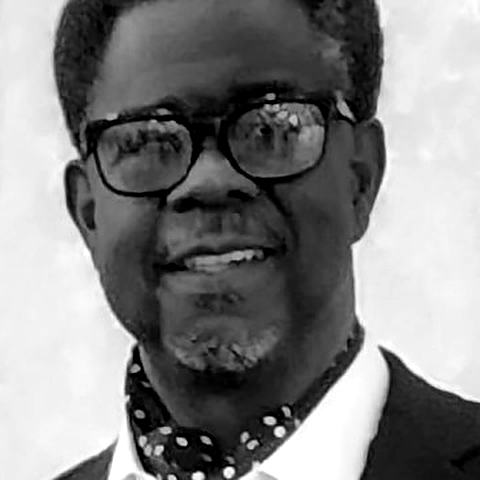
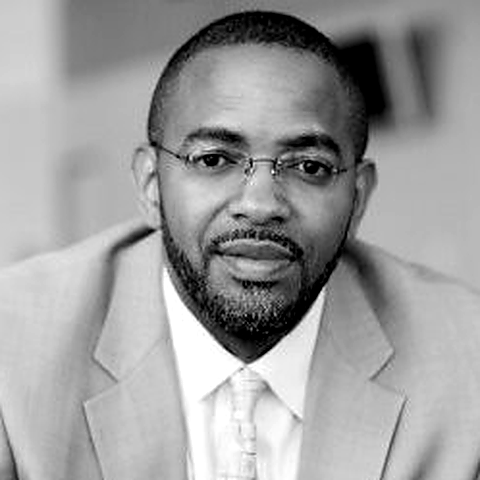
At the table

Editorial note: This episode preserves a live, exploratory conversation. Some historical and economic assertions are presented as speaker commentary. Terence’s D-CEZ materials describe a proposal and are not adopted City policy, a financing commitment, or a representation that every illustrated project has been approved or funded.

Why build the POD?

The opening discussion treats media as infrastructure. The hosts argue that neighborhood problems cannot be understood through isolated clips, algorithms, or headlines alone. The POD is conceived as a place to make room for context: conversations about economic mobility, community safety, health, family, mentorship, civic participation, and the responsibility to turn discussion into local action.

The intended audience begins with the African American community but does not end there. The hosts frame the program as an invitation to residents, organizers, business owners, educators, public servants, and anyone prepared to listen seriously and contribute constructively.

A chapter formed to serve

The conversation moves from the national founding of Groove Phi Groove Social Fellowship to the Detroit Gye Nyame Graduate Chapter’s local story. The chapter formed in September 1978 and was voted into active national chapter status on April 7, 1979. Its six founding members were Walter Armstrong, Harold Sullivan, Milton White, Toomage Abza, Harry Smith, and Allan McManus.

That distinction—formation in 1978 and national recognition in 1979—helps reconcile the two dates discussed in the episode. The chapter’s name invokes the West African Adinkra symbol Gye Nyame, commonly rendered “Except for God,” and its public mission centers service, education, ethical leadership, unity, and the alleviation of social and economic problems.

Read the documented chapter history and meet the founders →

From outreach to ownership

The Groove Community Campus gives the conversation a physical address. On Dexter Avenue, the chapter and campus are developing a three-property ecosystem: the Cornerstone at 7504 Dexter, the CashFlow Quadrant at 7404 Dexter, and the Groove B&B at 7443 Dexter. Together, they are intended to support administration, workforce training, financial literacy, entrepreneurship, media, hospitality, and community programming.

The governing idea is that durable community work needs durable community infrastructure. Programs matter, but so do buildings, operating revenue, technical capacity, and a place where residents can repeatedly gather, learn, organize, and build.

The Dexter Cultural Economic Zone proposal

Terence’s presentation expands the frame from three buildings to a corridor strategy. The proposed Dexter Cultural Economic Zone—or D-CEZ—organizes the area through cultural identity, resident-serving enterprise, historic preservation, neighborhood-scale economic nodes, and connections to larger investment and trade networks.

The slides are best understood as a strategic discussion document. They explore a possible classification system for cultural economic zones, a Dexter pilot, a Sankofa arts-and-culture anchor, a network of local projects, and policy recommendations for Detroit’s Planning and Development Department. Project names, budgets, ownership, timelines, public approvals, and financing shown in the presentation require confirmation from their respective primary sources.

What listeners can carry forward

  • Own the means of conversation. A community platform can preserve context, memory, and accountability that short-form media often loses.
  • Connect history to present work. Chapter history matters most when it informs current service, mentorship, and institution building.
  • Treat place as infrastructure. Buildings and corridors can become platforms for training, enterprise, culture, media, and community coordination.
  • Organize at block level. The closing discussion returns to practical neighborhood participation: knowing one’s neighbors, joining or forming a block club, and connecting local organization to city systems.
  • Move from commentary to contribution. The episode closes with a challenge to begin with the assets, relationships, and responsibilities already within reach.
Continue exploring

Presentation materials

See what listeners heard

Terence’s screen-shared slides are provided as visual references to the recorded discussion. Select an image to open the full-size version.

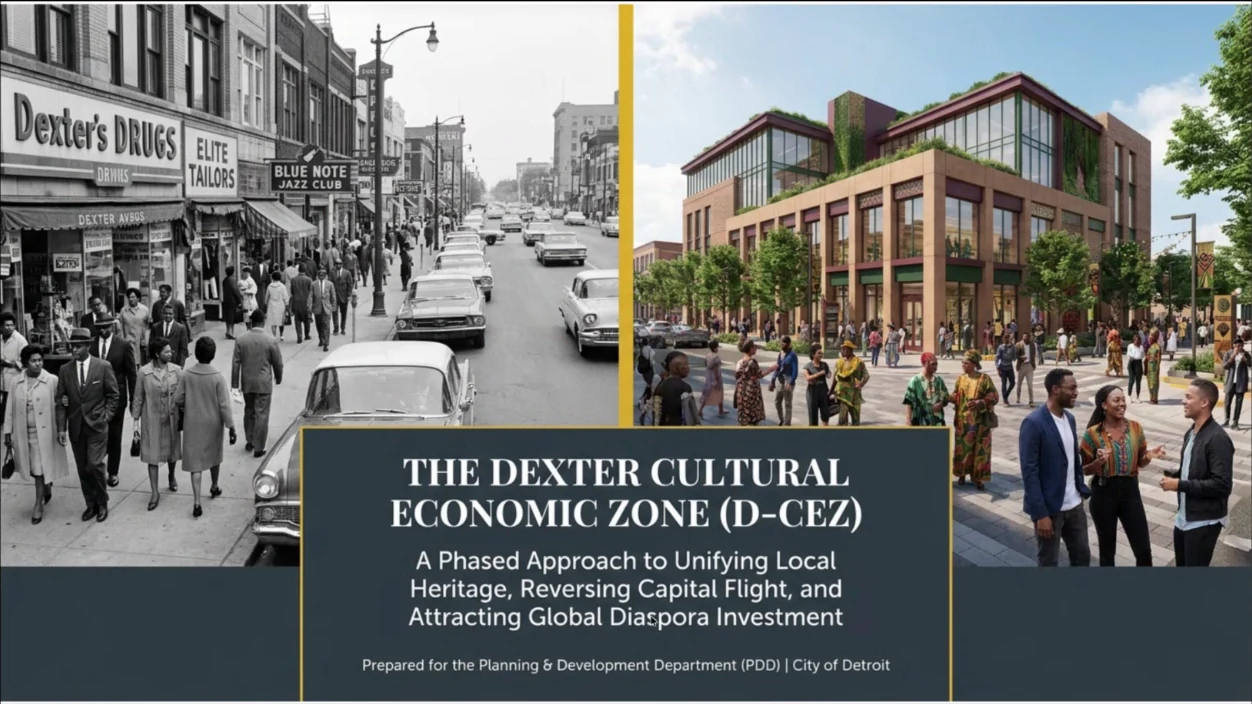
Title slide for the proposed Dexter Cultural Economic Zone
01 · The frame. The proposed Dexter Cultural Economic Zone as a phased cultural and economic strategy.
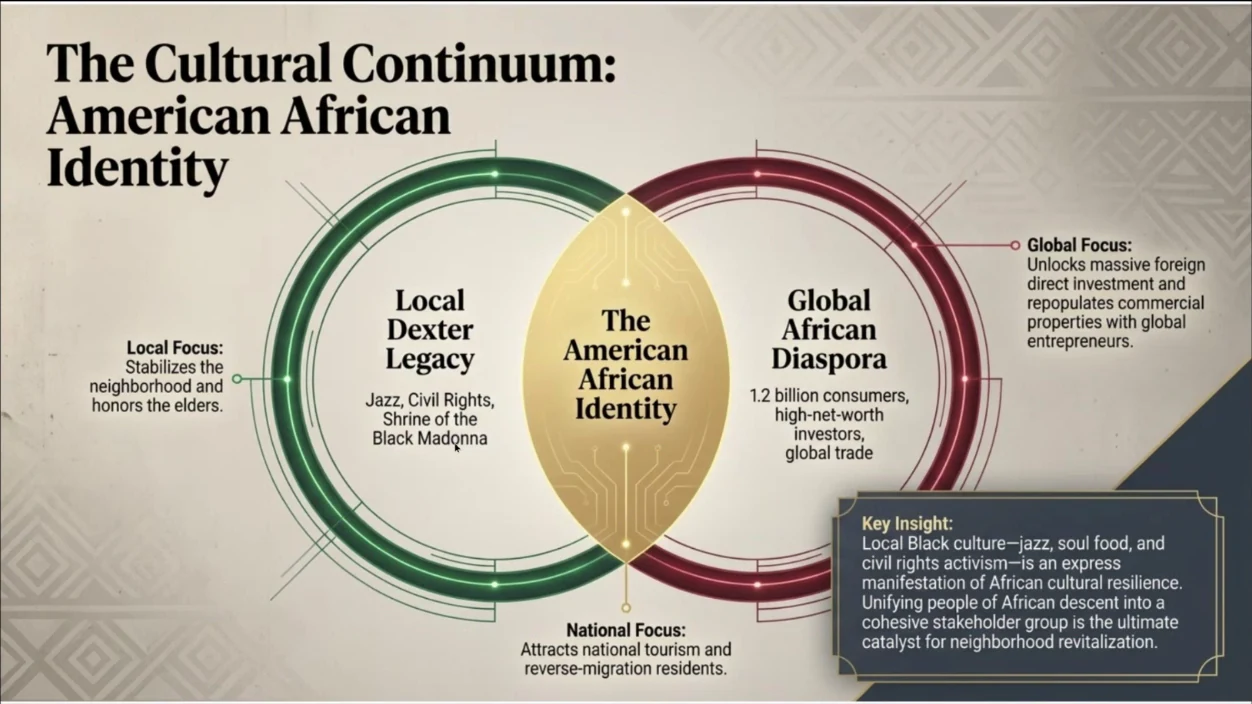
Diagram describing local, American African, and global African identity
02 · Cultural continuum. The presenter’s model connecting local Dexter history to national and global identity.
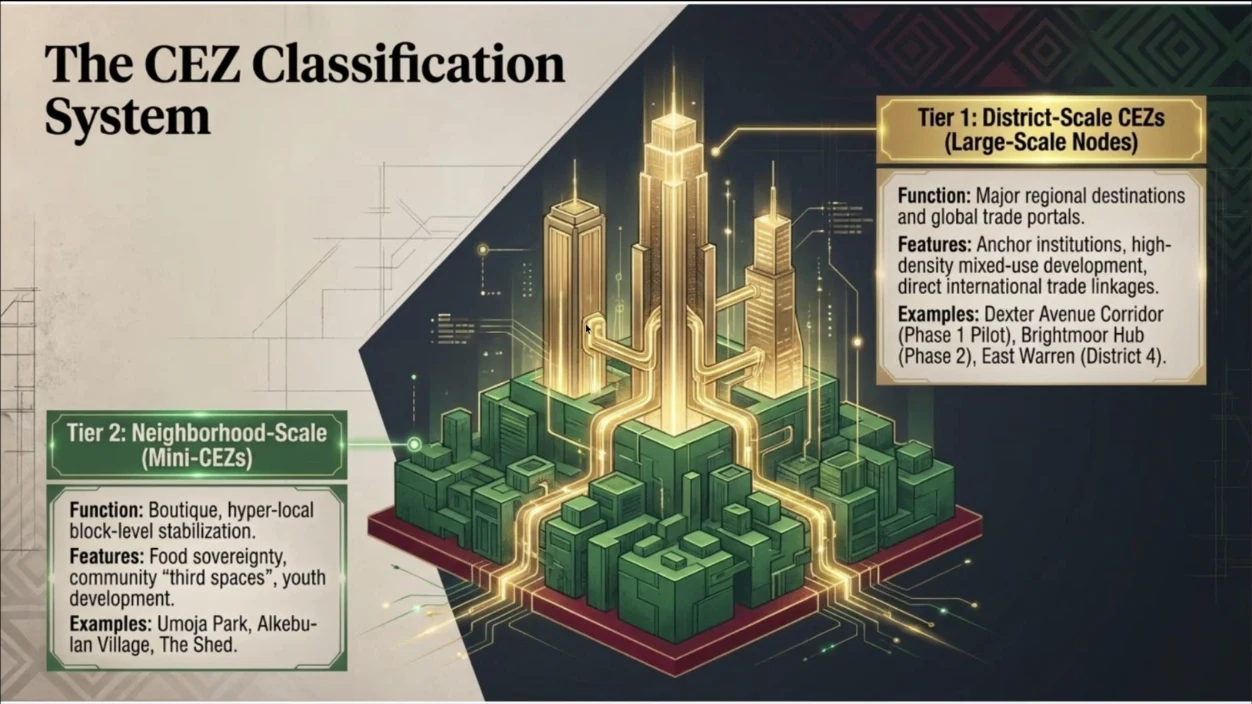
Two-tier classification system for cultural economic zones
03 · Scale. A proposed distinction between district-scale and neighborhood-scale cultural economic zones.
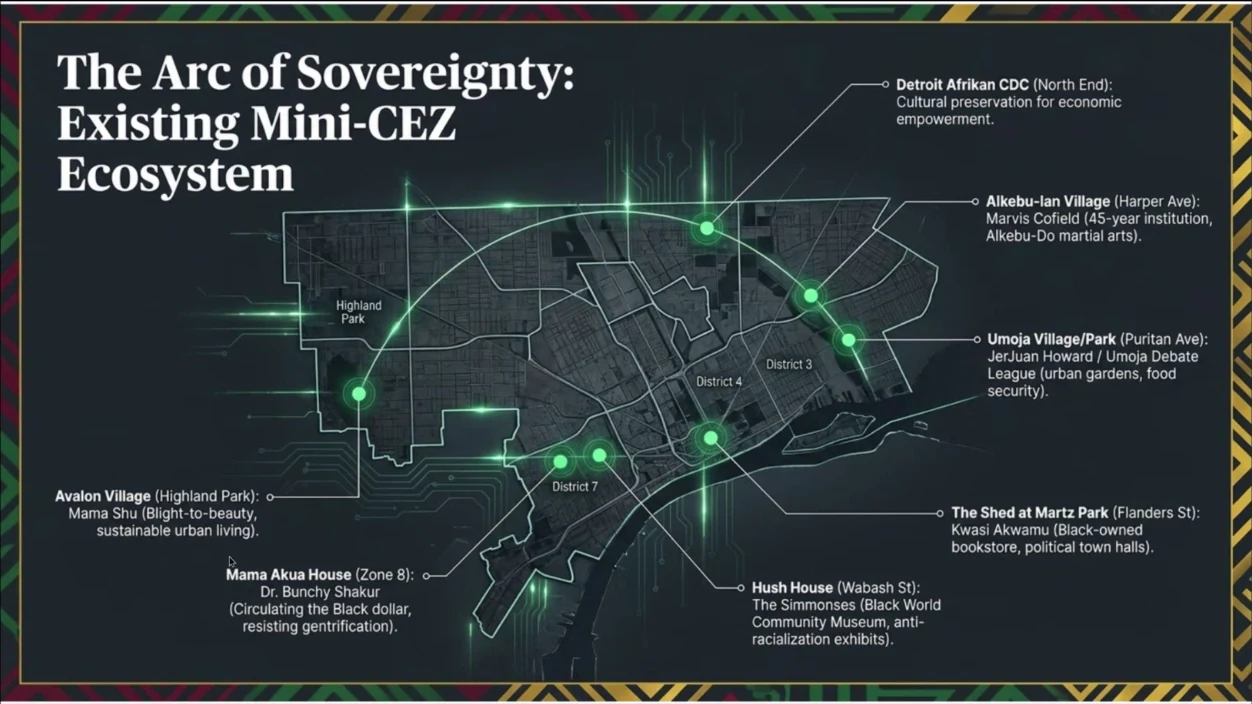
Map diagram of an existing neighborhood-scale cultural and business ecosystem
04 · Existing ecosystem. A discussion map connecting cultural anchors, businesses, and institutions.
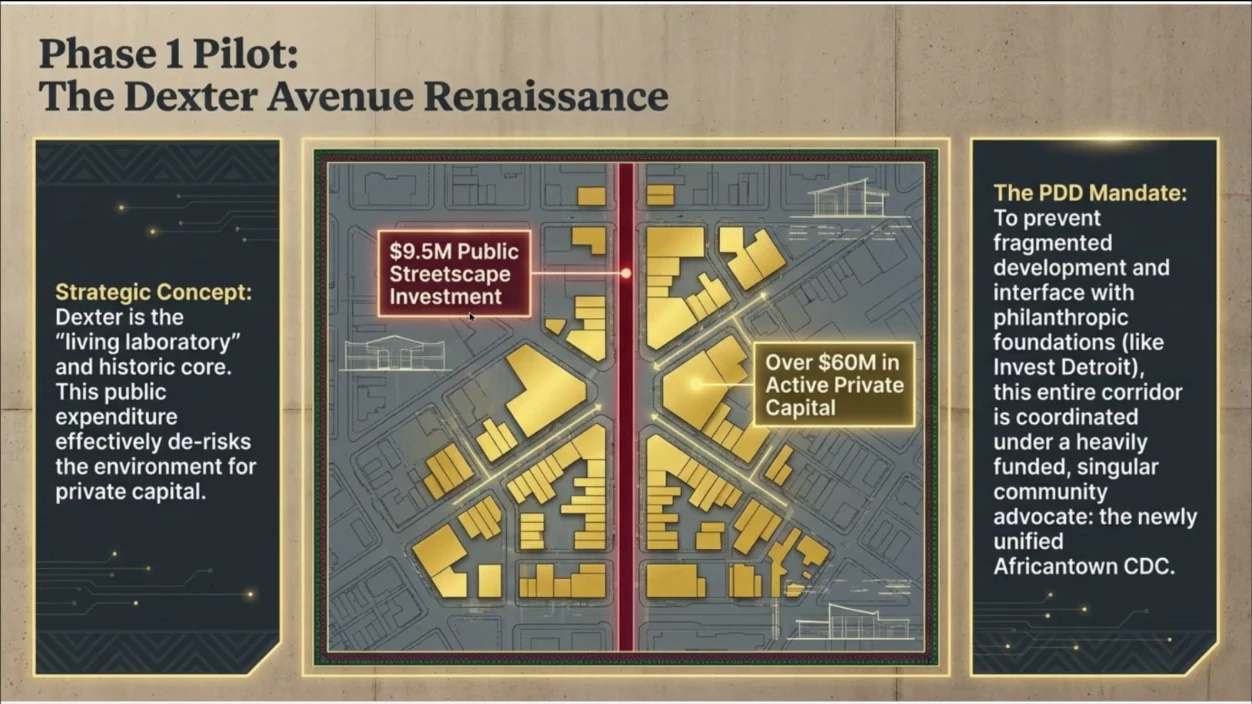
Conceptual Phase 1 pilot diagram for the Dexter Avenue Renaissance
05 · Dexter pilot. A conceptual Phase 1 footprint centered on Dexter Avenue.
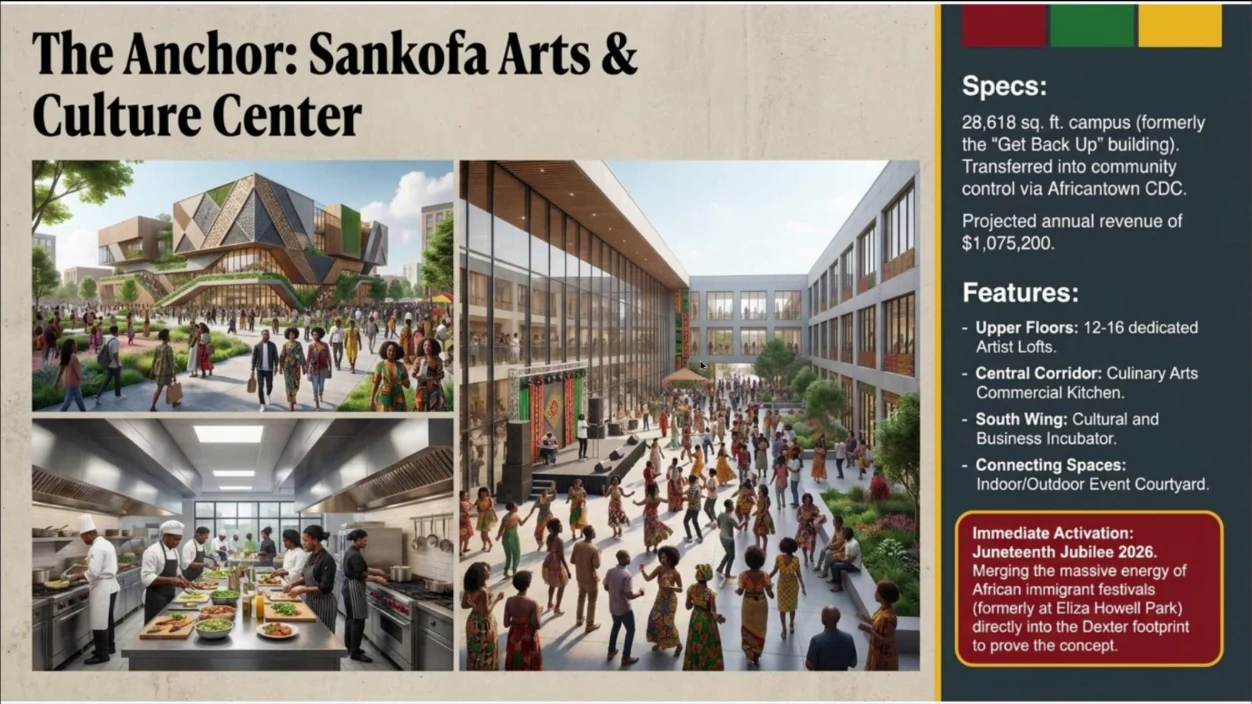
Conceptual renderings for a proposed Sankofa Arts and Culture Center
06 · Proposed anchor. Conceptual imagery and program ideas for a Sankofa arts-and-culture center.
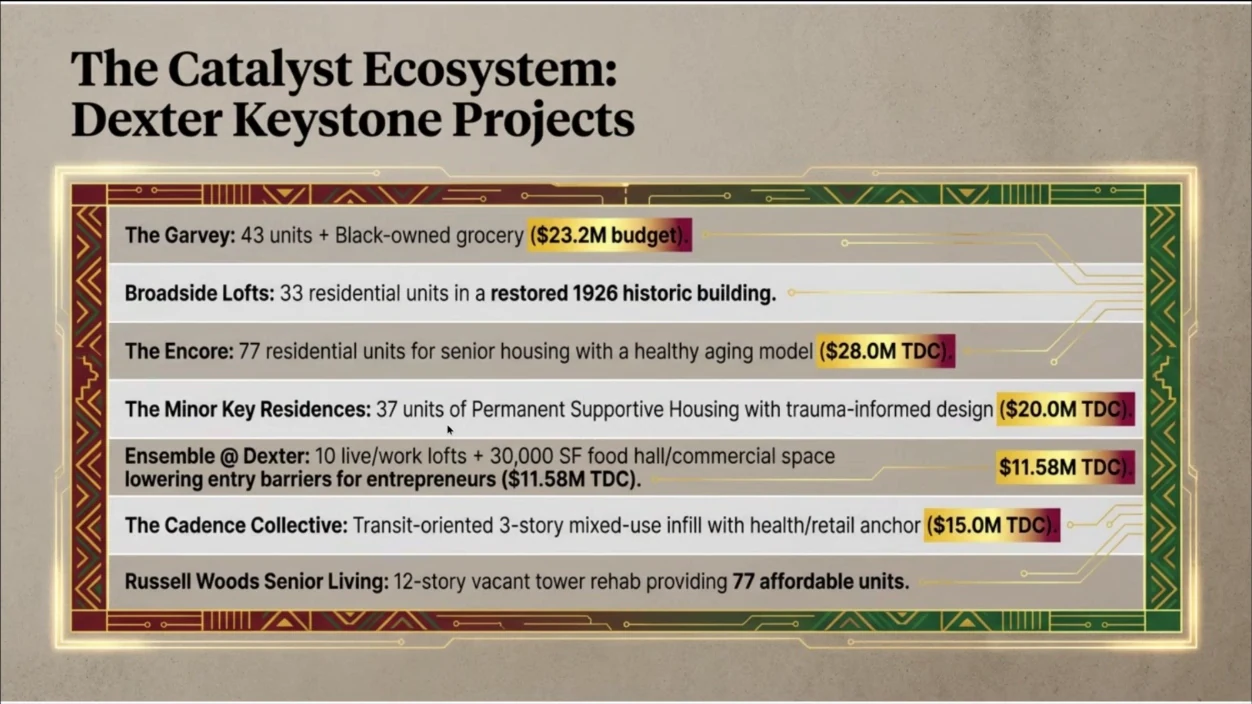
List of proposed or discussed Dexter corridor keystone projects
07 · Project ecosystem. Developments and institutions discussed as possible corridor catalysts; statuses require primary-source confirmation.
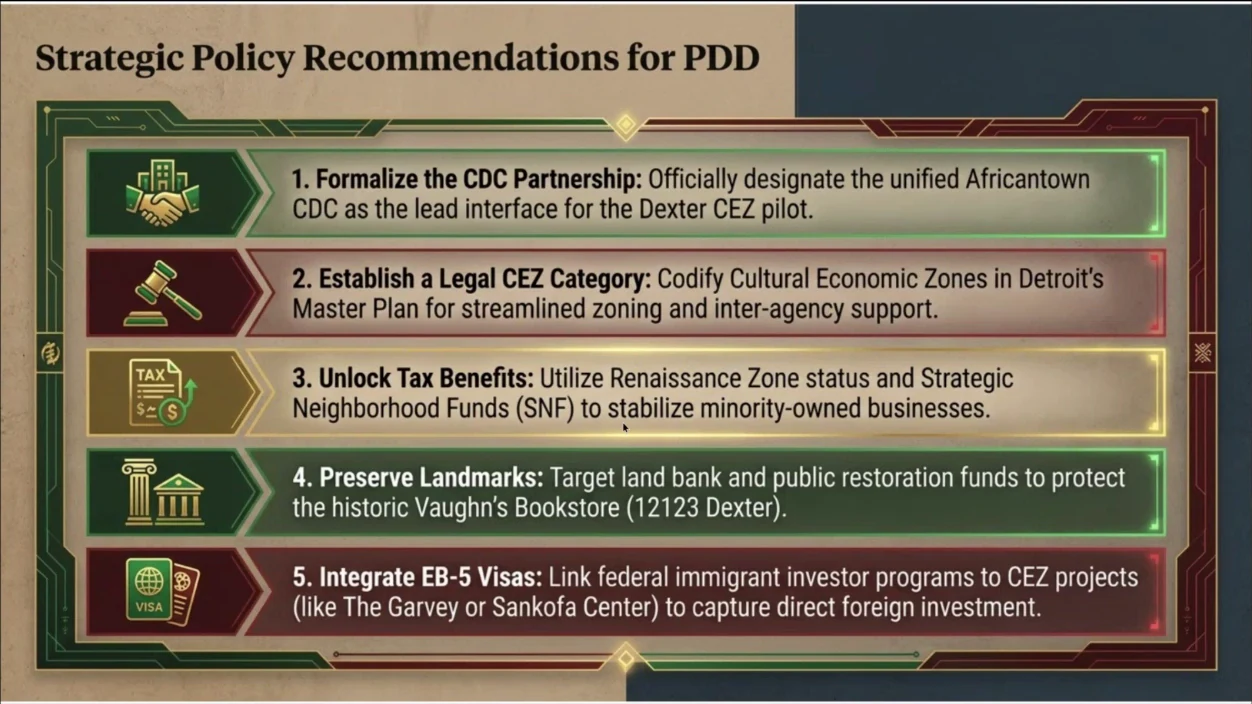
Strategic policy recommendations presented for Detroit Planning and Development
08 · Recommendations. Five proposed policy directions presented for discussion—not an adopted City plan.
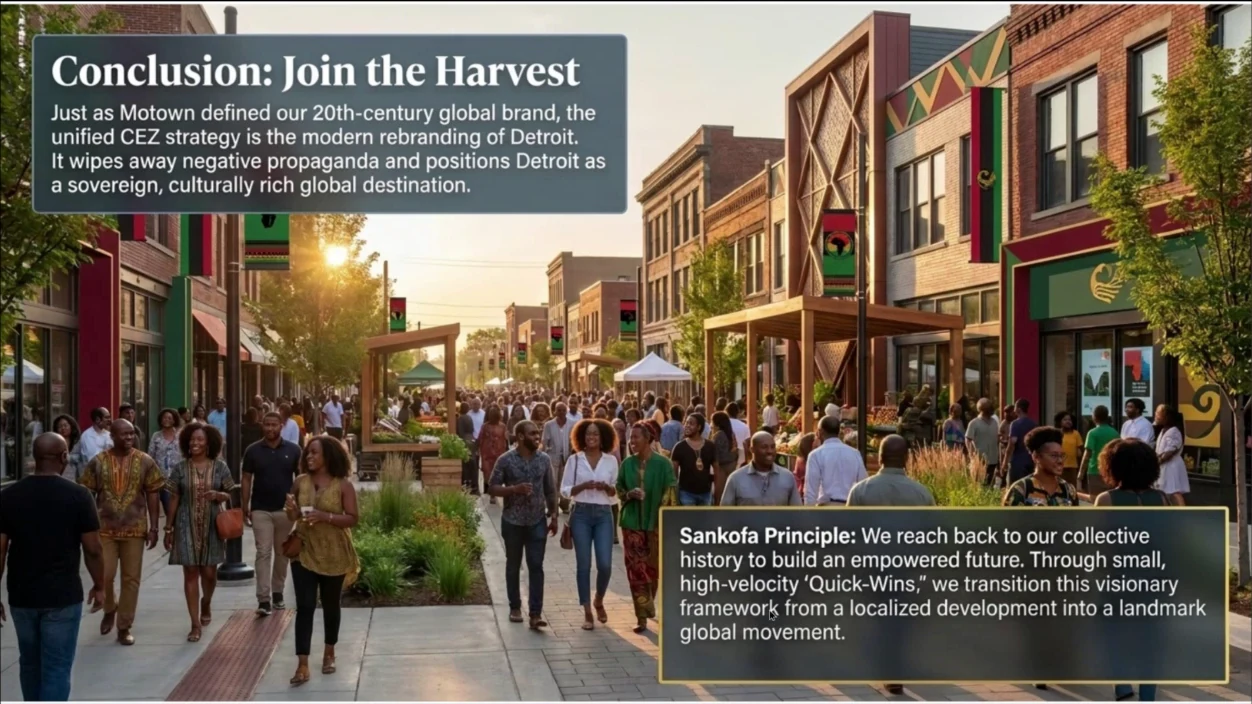
Conclusion slide titled Join the Harvest with a conceptual neighborhood streetscape
09 · Join the harvest. The presentation’s closing vision of culturally grounded neighborhood development.

Accessible slide descriptions

01 · The frame — full text description

The title slide pairs a historic black-and-white Dexter Avenue street scene with a conceptual contemporary rendering. It names the proposal “The Dexter Cultural Economic Zone (D-CEZ)” and describes it as a phased approach to unifying local heritage, reversing capital flight, and attracting global diaspora investment. The slide says it was prepared for Detroit’s Planning and Development Department; that wording documents the presentation and does not establish City sponsorship or approval.

02 · Cultural continuum — full text description

A three-part diagram connects “Local Dexter Legacy,” “The American African Identity,” and “Global African Diaspora.” Local examples include jazz, civil rights, and the Shrine of the Black Madonna. The national section frames culture as an economic and civic asset. The global section describes links to tourism, investment, and cultural entrepreneurship. These are the presenter’s strategic claims, not independently verified findings.

03 · CEZ classification — full text description

The slide proposes two categories. Tier 1 is a district-scale cultural economic zone with large-scale nodes, regional destinations, tourism, and mixed-use development. Tier 2 is a neighborhood-scale or “mini-CEZ” focused on hyper-local stabilization, food sovereignty, community gathering, youth development, and visitor appeal. Illustrated examples are conceptual.

04 · Existing ecosystem — full text description

A Detroit map presents an “Arc of Sovereignty” linking neighborhood organizations and cultural anchors. Labels include Detroit Afrikan CDC, Alkebu-lan Village, Umoja Village, The Shed at Martz Park, Hush House, Mama Akua House, Avalon Village, and related community sites. Inclusion on the slide does not verify affiliation with DGC or endorsement of the D-CEZ proposal.

05 · Dexter pilot — full text description

A conceptual district map centers a red north-south corridor on Dexter Avenue and highlights surrounding parcels. The slide labels “$9.5M Public Streetscape Investment” and “Over $60M in Active Private Capital,” and calls Dexter a “living laboratory.” Those amounts and statuses are reproduced as presentation content only and require primary-source confirmation.

06 · Proposed Sankofa anchor — full text description

Conceptual renderings show a modern arts-and-culture complex with gathering, performance, culinary, commercial, and outdoor spaces. The slide lists approximately 28,618 square feet, 16 artist lofts, a central corridor, culinary arts commercial kitchen, cultural and business incubator uses, and projected annual revenue. It also discusses a possible site and activation timeline. Every specification, site status, cost, revenue projection, and schedule remains unverified proposal material.

07 · Dexter project ecosystem — full text description

The slide lists prospective corridor projects including The Garvey, Broadside Lofts, The Encore, The Minor Key Residences, Ensemble at Dexter, The Cadence Collective, and Russell Woods Senior Living. It displays housing-unit counts, proposed uses, and development figures ranging from roughly $11.58 million to $28 million for several entries. The list is a presenter-created project inventory; ownership, budgets, financing, approvals, and development status require confirmation from each project’s primary source.

08 · Policy recommendations — full text description

Five recommendations are shown: formalize a community-development-corporation partnership; establish a legal cultural-economic-zone category; use Renaissance Zone and Strategic Neighborhood Fund tools; preserve landmarks using land-bank and public-restoration resources; and connect qualifying projects to EB-5 investment programs. These are proposals for discussion, not adopted policy or legal guidance.

09 · Join the harvest — full text description

The conclusion slide presents a conceptual neighborhood streetscape and invites viewers to participate in a culturally grounded development vision. The imagery is aspirational and does not depict a completed or City-approved Dexter Avenue project.

Presentation graphics © their respective creator or source. Maps, portraits, quotations, renderings, development details, financial figures, and policy descriptions shown within the slides have not all been independently verified by the Detroit Gye Nyame Graduate Chapter. Inclusion documents the episode discussion and does not constitute endorsement, ownership, City approval, or a funding commitment.

Join the next conversation

What should the POD take on next?

Suggest a guest, question, neighborhood issue, or solution worth examining. The DGC Empowerment Hour is being built as a community platform, and the community should help shape the agenda.

Suggest a guest or topic All episodes