
About this episode
Episode 0 is the table-setting conversation for the DGC Empowerment Hour—a platform for sustained discussion of the social and economic issues affecting Detroit’s African American community and communities beyond it. The hosts explain why the work needs a voice of its own, revisit the chapter’s beginnings, and connect its service tradition to a physical stake in the future of Dexter Avenue.
At the table
-
 Fl. Craig “Bossman” MuhammadLinkedIn · Bilal Muhammad ↗ Host · Community and chapter perspective
 -
 Fl. Terence “T” WillisView LinkedIn profile ↗ Host · Economic-development presentation
 -
 Fl. Rich “PsyOp” VincentView LinkedIn profile ↗ Host · Moderator and technology perspective
 -
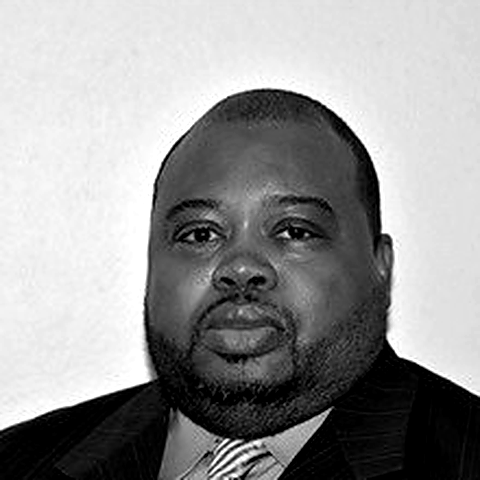 Fl. Ed “Bosshog” WithersView LinkedIn profile ↗ Guest · DGC President
Why build the POD?
The opening discussion treats media as infrastructure. The hosts argue that neighborhood problems cannot be understood through isolated clips, algorithms, or headlines alone. The POD is conceived as a place to make room for context: conversations about economic mobility, community safety, health, family, mentorship, civic participation, and the responsibility to turn discussion into local action.
The intended audience begins with the African American community but does not end there. The hosts frame the program as an invitation to residents, organizers, business owners, educators, public servants, and anyone prepared to listen seriously and contribute constructively.
A chapter formed to serve
The conversation moves from the national founding of Groove Phi Groove Social Fellowship to the Detroit Gye Nyame Graduate Chapter’s local story. The chapter formed in September 1978 and was voted into active national chapter status on April 7, 1979. Its six founding members were Walter Armstrong, Harold Sullivan, Milton White, Toomage Abza, Harry Smith, and Allan McManus.
That distinction—formation in 1978 and national recognition in 1979—helps reconcile the two dates discussed in the episode. The chapter’s name invokes the West African Adinkra symbol Gye Nyame, commonly rendered “Except for God,” and its public mission centers service, education, ethical leadership, unity, and the alleviation of social and economic problems.
Read the documented chapter history and meet the founders →
From outreach to ownership
The Groove Community Campus gives the conversation a physical address. On Dexter Avenue, the chapter and campus are developing a three-property ecosystem: the Cornerstone at 7504 Dexter, the CashFlow Quadrant at 7404 Dexter, and the Groove B&B at 7443 Dexter. Together, they are intended to support administration, workforce training, financial literacy, entrepreneurship, media, hospitality, and community programming.
The governing idea is that durable community work needs durable community infrastructure. Programs matter, but so do buildings, operating revenue, technical capacity, and a place where residents can repeatedly gather, learn, organize, and build.
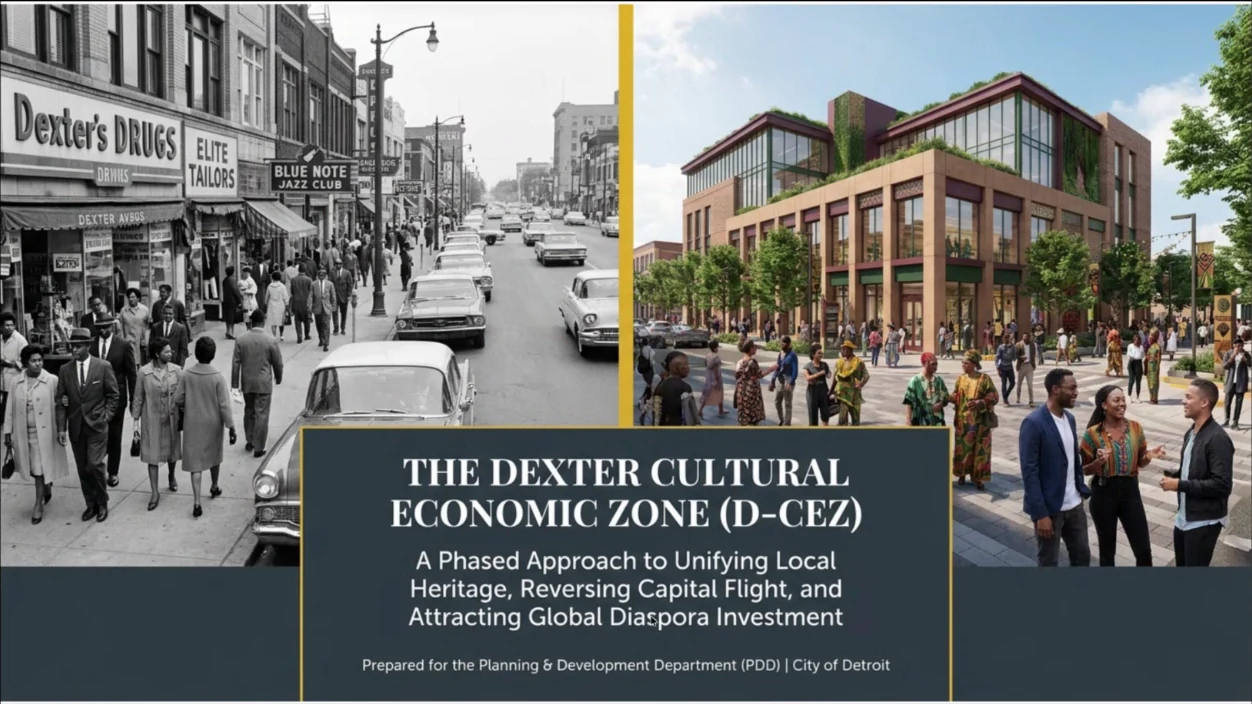
The Dexter Cultural Economic Zone proposal
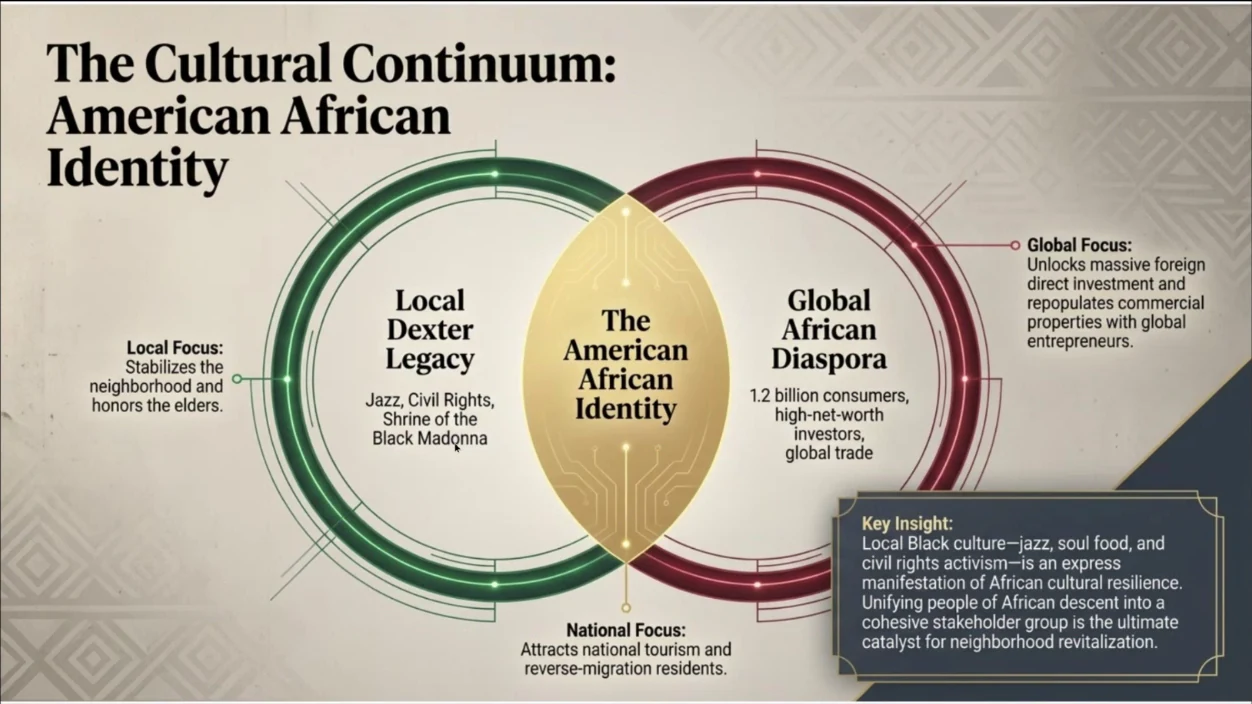
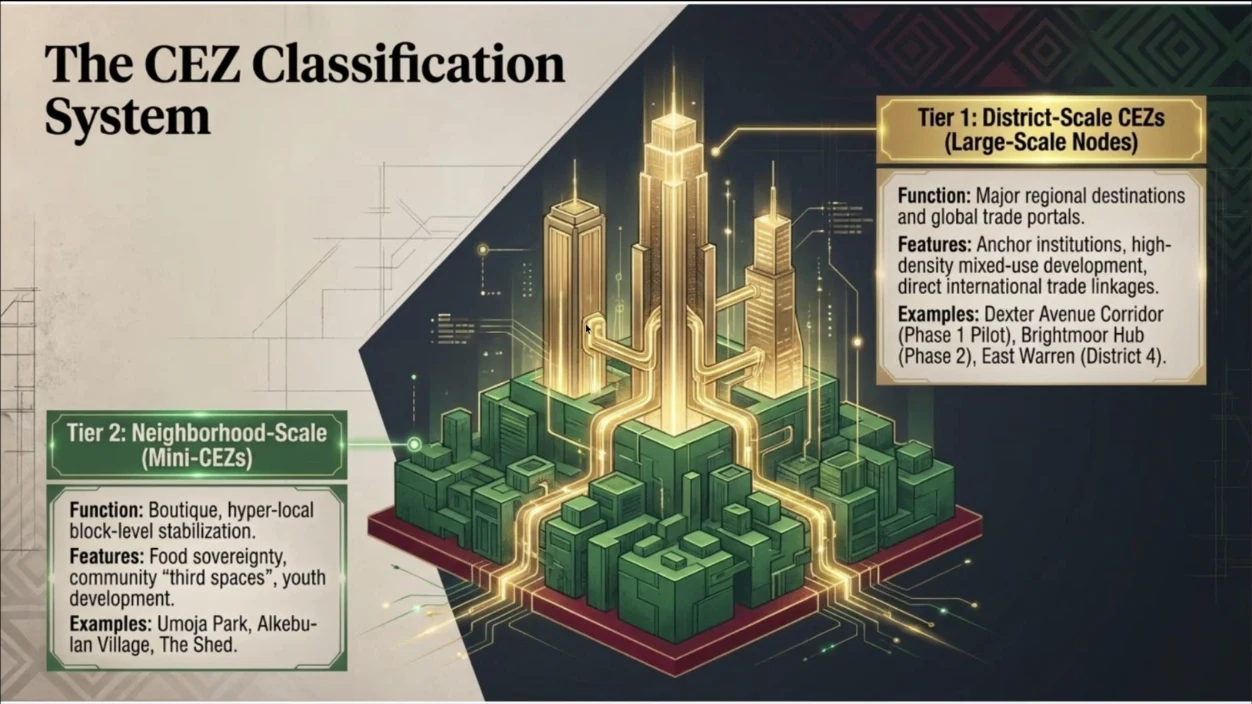
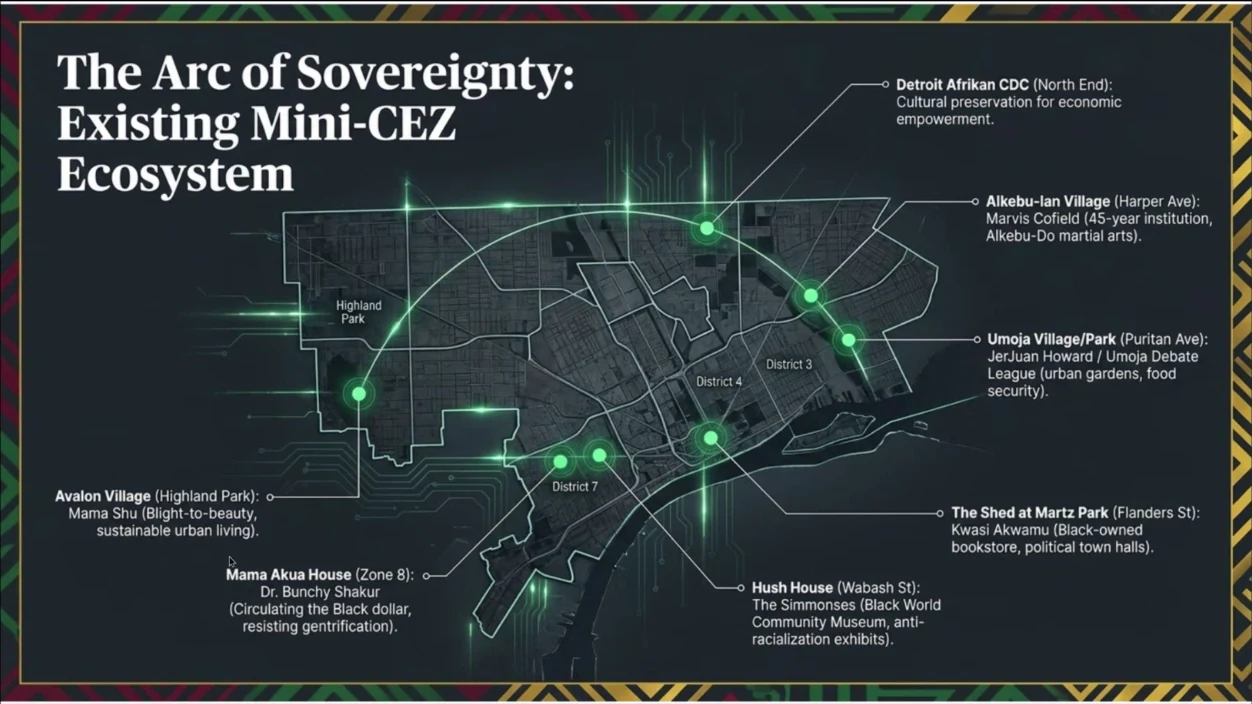
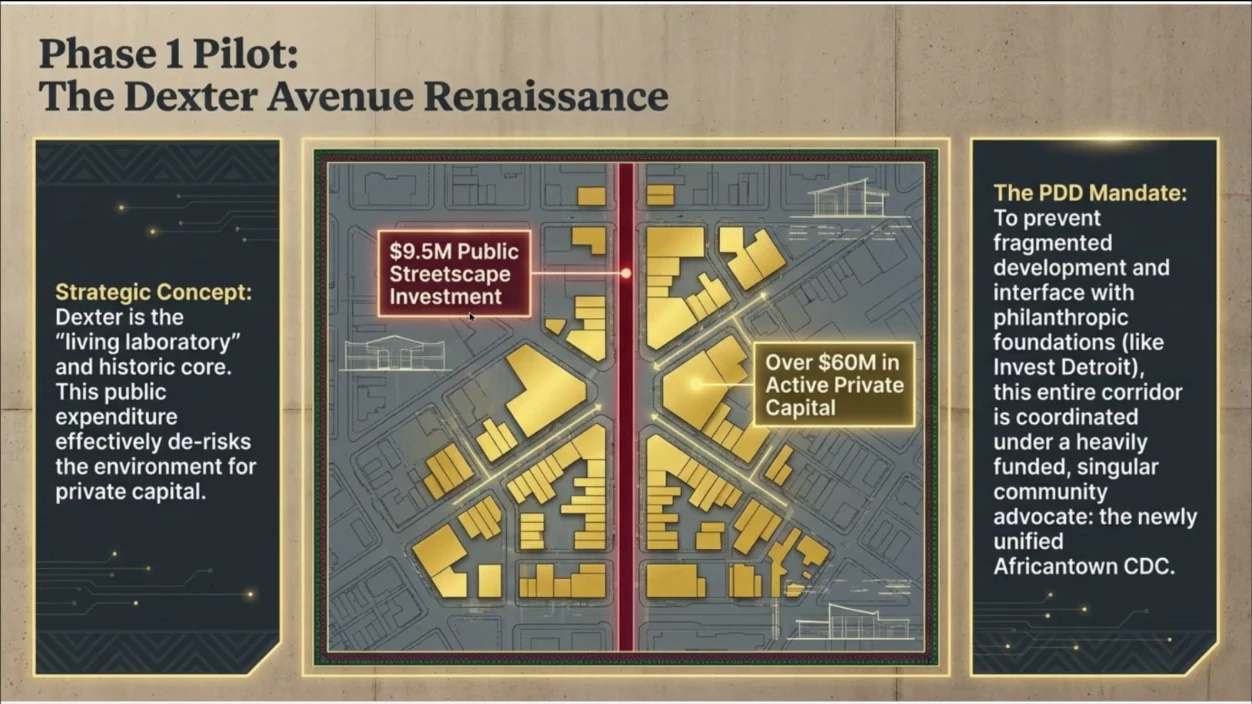
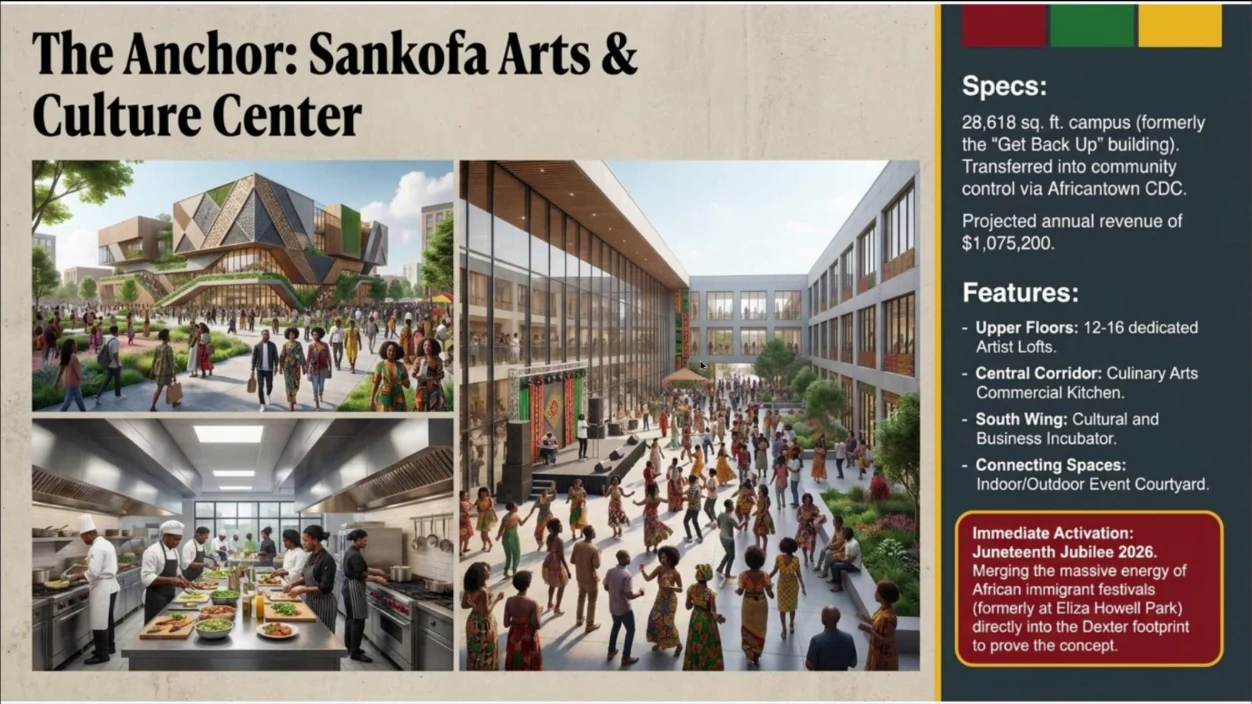
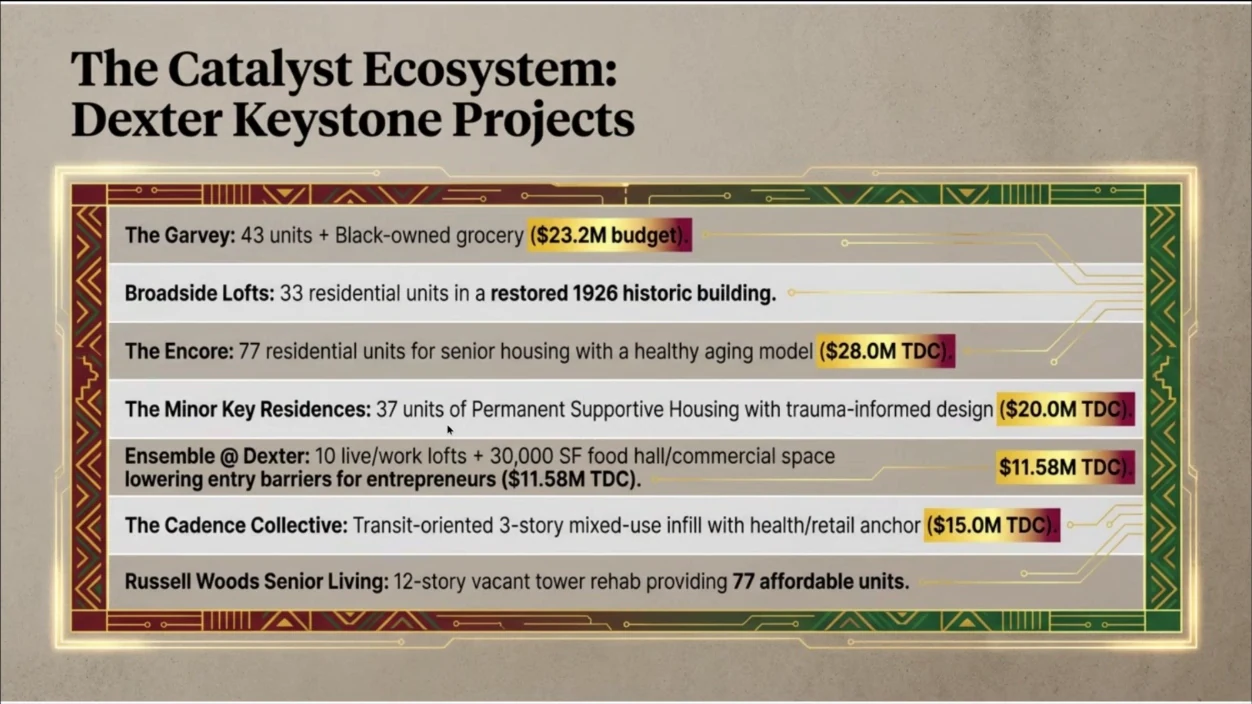
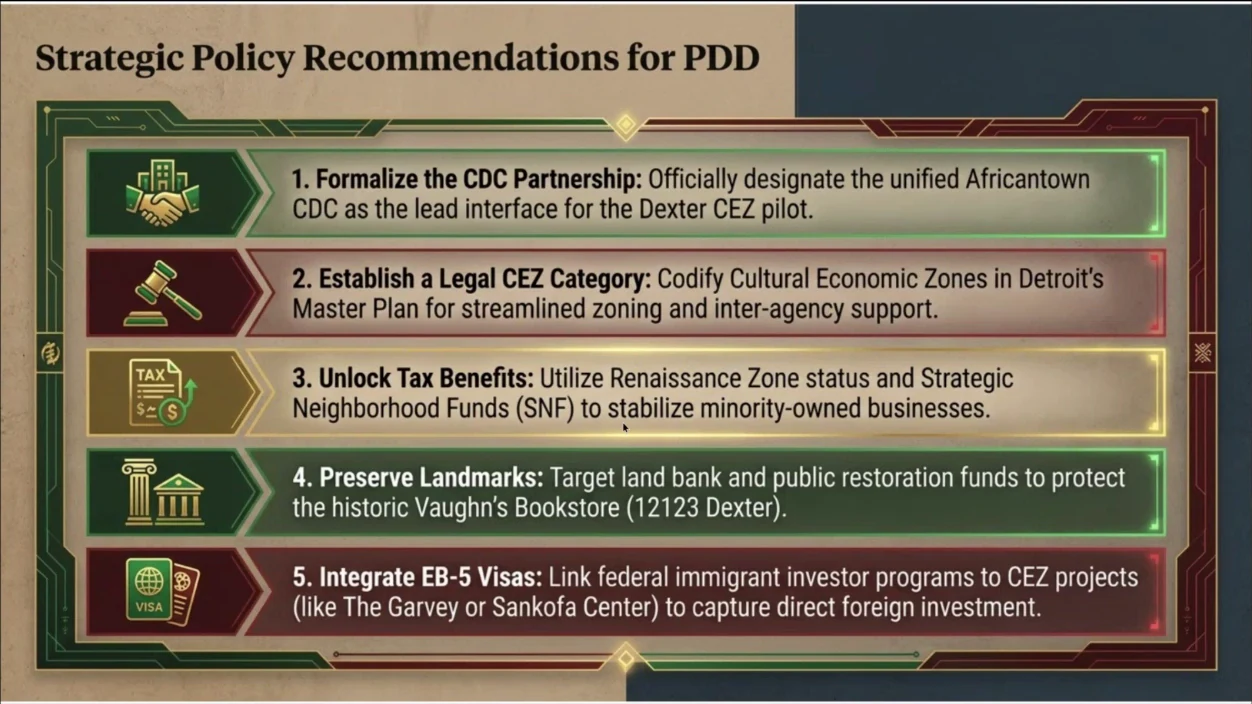
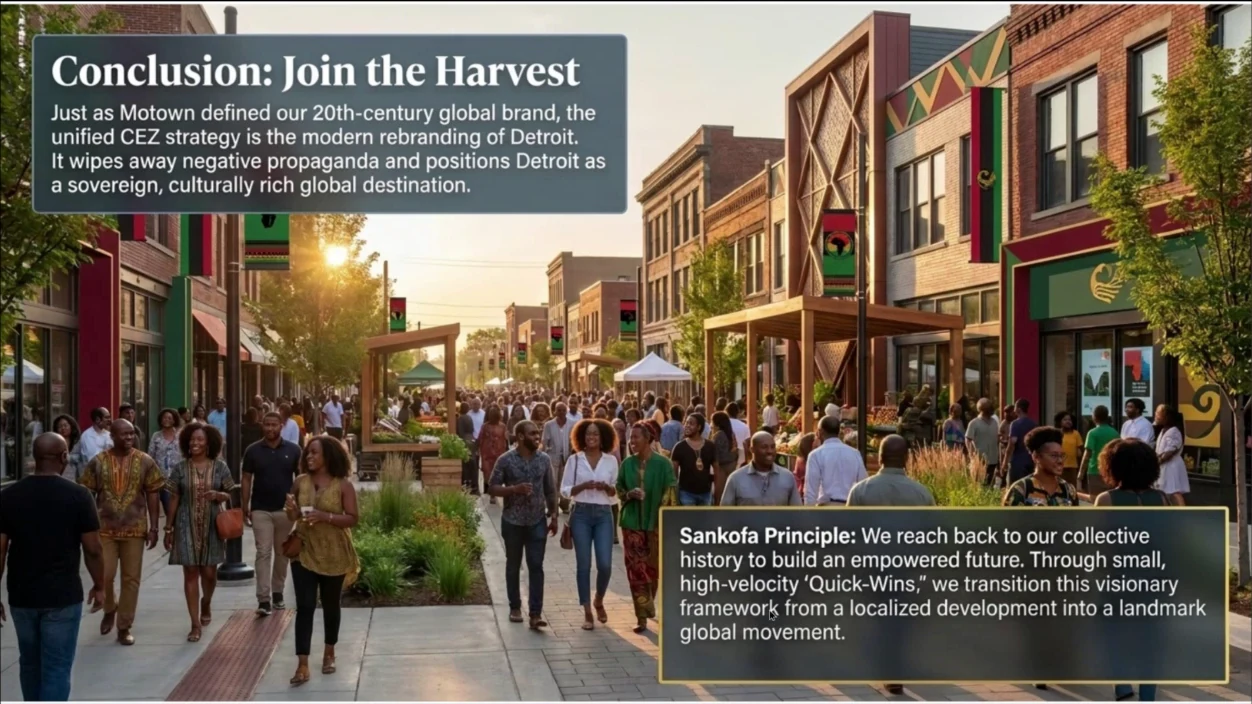
Terence’s presentation expands the frame from three buildings to a corridor strategy. The proposed Dexter Cultural Economic Zone—or D-CEZ—organizes the area through cultural identity, resident-serving enterprise, historic preservation, neighborhood-scale economic nodes, and connections to larger investment and trade networks.
The slides are best understood as a strategic discussion document. They explore a possible classification system for cultural economic zones, a Dexter pilot, a Sankofa arts-and-culture anchor, a network of local projects, and policy recommendations for Detroit’s Planning and Development Department. Project names, budgets, ownership, timelines, public approvals, and financing shown in the presentation require confirmation from their respective primary sources.
What listeners can carry forward
- Own the means of conversation. A community platform can preserve context, memory, and accountability that short-form media often loses.
- Connect history to present work. Chapter history matters most when it informs current service, mentorship, and institution building.
- Treat place as infrastructure. Buildings and corridors can become platforms for training, enterprise, culture, media, and community coordination.
- Organize at block level. The closing discussion returns to practical neighborhood participation: knowing one’s neighbors, joining or forming a block club, and connecting local organization to city systems.
- Move from commentary to contribution. The episode closes with a challenge to begin with the assets, relationships, and responsibilities already within reach.